
The world of education is in constant motion, evolving every day. As the demand for skill-based curriculum is on the rise, educators, and institutions are searching for innovative and effective learning methods for students. This is why blended learning in skills-based curriculum has emerged as an effective method. Blended learning combines both online and face-to-face teaching to engage students and improve their learning outcomes.
According to Research.com, almost 61% of students have taken at least one online course or participated in a completely online-based program. This shows that traditional classroom-only teaching methods are proving to be insufficient. As you scroll down, you will learn how blended learning is bridging that gap and why it is getting the attention of educators around the world.

Understanding Blended Learning
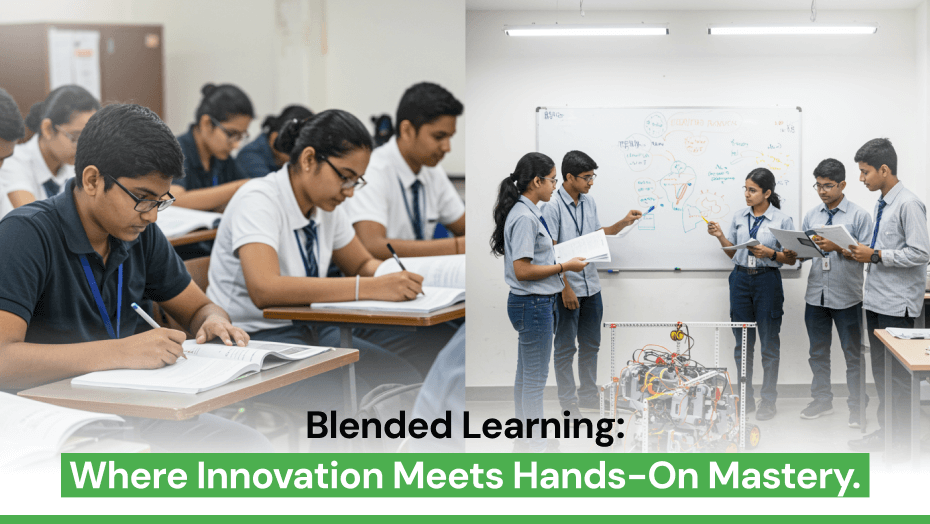
Blended learning combines traditional face-to-face teaching with online education tools to create a more flexible and personalized learning experience. In the context of a skills-based curriculum, it allows students to gain theoretical knowledge through digital platforms and then apply it through hands-on, real-world activities in the classroom.
Rather than replacing the teacher, technology complements their role, providing students with access to digital resources, self-paced modules, and virtual labs at the same time, benefiting from the guidance of an educator in physical settings. This approach offers the best of both worlds: structure and spontaneity.

How Does Blended Learning Empower Students?
Blended learning nurtures students, allowing learners to take more control of how, when, and where they learn. Here’s how this model is especially effective in a skills-based curriculum:
- Personalized Learning Paths:
Students can access:
- recorded lessons
- interactive simulations
- online assessments
Adjusting the pace based on their strengths or areas of improvement.
- Better Engagement
Digital tools, such as gamified quizzes and video content, make learning more interactive and fun.
- Real-Time Feedback
Many online platforms provide instant performance reports, helping students and teachers identify gaps in understanding.
- Stronger Retention
When theoretical learning is paired with real-life application, students tend to retain knowledge better.
- Equity in Access:
Blended learning can also bridge learning gaps for students who may miss school due to illness or other reasons, as they can access missed content online.
Types of Blended Learning Models
There’s no one-size-fits-all approach. Schools and educators can choose from various hybrid learning models depending on their students’ needs, infrastructure, and curriculum.
1. Flipped Model
The flipped classroom turns the conventional model on its head. Students first engage with new content online.
- Videos
- Podcasts
- Readings
outside the classroom. The in-person time is then devoted to:
- Discussions
- Group projects
- Applying knowledge
This model works wonderfully for skill-building subjects like design, technology, or entrepreneurship, where hands-on mentorship in class supports the foundational understanding developed at home.
2. Face-to-Face Driver Model
In this approach, the majority of instruction is delivered in person. Technology supplements the lesson, perhaps through computer labs, adaptive learning platforms, or online assignments. It’s ideal for early learners or students who need high levels of guidance and support.
3. Rotational Model
Here, students rotate between learning modalities, such as small-group instruction, digital modules, and independent tasks based on a fixed schedule or teacher discretion. This model encourages collaboration, independence, and digital literacy all in one.
4. Flex Model
In the flex model, most content is delivered online, and teachers act as mentors or facilitators who provide support as needed. Students move through the curriculum at their own pace and come to class for guidance, feedback, or to work on practical projects. This works well for senior students or specialized skill-training modules.
5. Virtual Model
This model is primarily online, with very limited physical interactions. It is generally suited for older students who are self-disciplined and can manage their schedules effectively. While it is less common in younger grade levels, it has become a viable solution in recent years.
Each of these models plays a unique role in shaping successful blended learning in skills-based curriculum, depending on the age group, subject matter, and learning goals.
Best Practices for Designing a Blended Learning Blended Learning in Skills-Based Curriculum
Designing an effective blended learning environment requires more than simply adding tech to the classroom. Here are essential practices for schools and educators:
- Align with Learning Objectives
The technology used should directly support the skill or concept being taught. Whether it’s an interactive chemistry lab or a typing simulator, the digital component must map back to clear learning outcomes.
- Thoughtful Integration of Tech
Technology should not be a distraction. Use platforms and tools that are age-appropriate, intuitive, and designed for education. Test them thoroughly to ensure they enhance, not hinder, the learning experience.
- Maintain a Balance: In-Person vs Online
One of the challenges of hybrid learning models is finding the right balance. Some subjects may require more classroom time (like team-building exercises or performing arts), while others can be effectively taught online. Schools must assess and find the right balance.
- Regular Assessment and Feedback
Digital platforms can automate quizzes, track progress, and highlight trends in performance. Pairing these insights with teacher feedback helps students stay on course and feel motivated. Hence, regular assessment and feedback are a crucial part.
- Continuous Teacher Training
Educators must be trained not just in operating digital tools but also in integrating them meaningfully. Professional development programs are essential to keep up with changing tech and teaching methods.
- Encourage Peer Learning
Use breakout rooms, online discussion boards, and collaborative tools like Google Workspace to allow students to learn from one another. This supports communication skills that is a vital part of most skill-based programs.
Why 2sigma Is The Best Place For Blended Learning
At 2sigma, we believe that preparing children for the future means blending modern tools with time-tested teaching. Our blended learning in skills-based curriculum is designed to ensure that every student learns by doing, whether it’s designing prototypes or collaborating on digital projects.
At 2sigma, we’re not just teaching skills. We’re nurturing creators, collaborators, and critical thinkers. Blended learning is not a trend for us; it’s a thoughtful response to the needs of today’s learners and tomorrow’s world.